
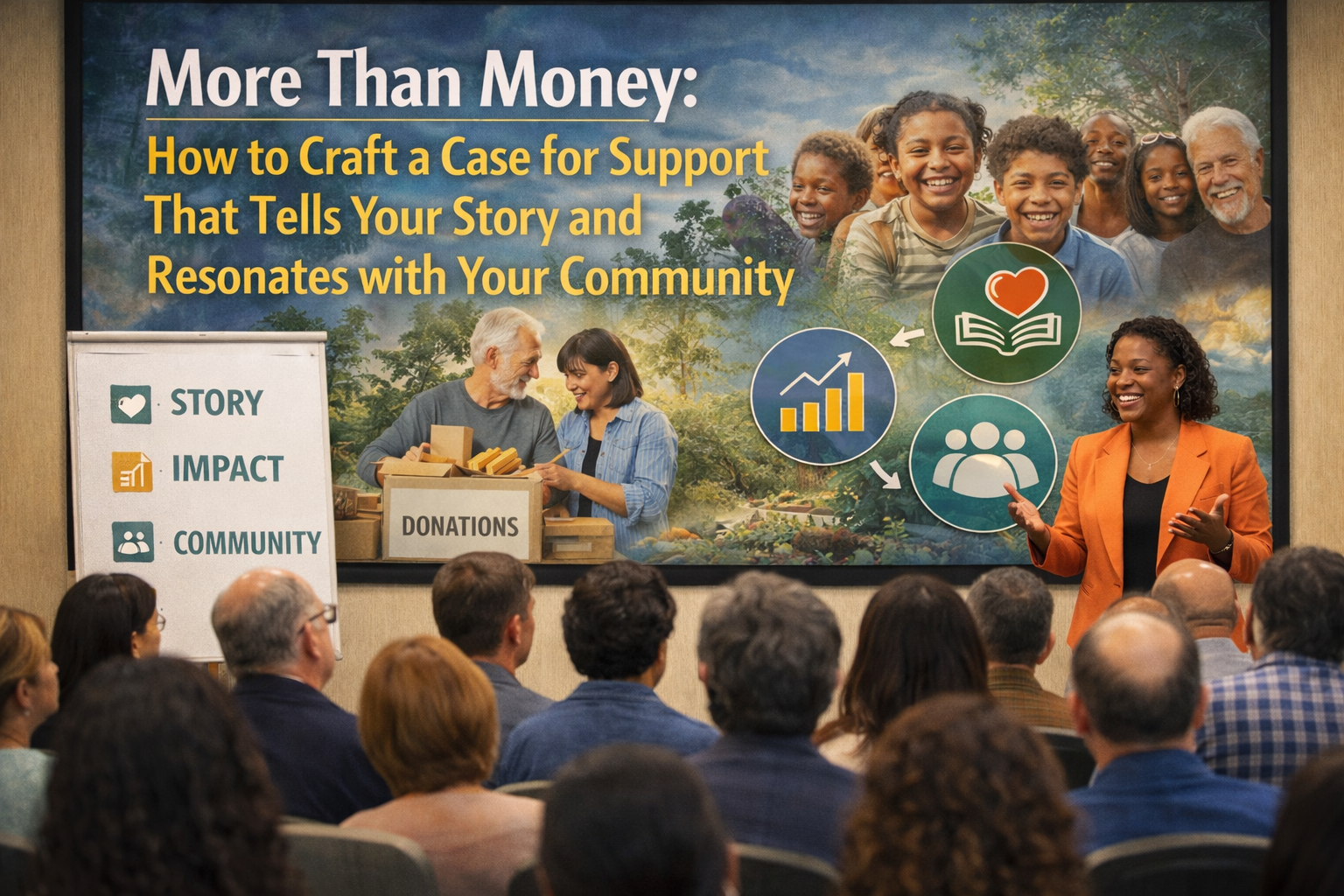
You’ve got a best-in-class development office, a board of directors that is both committed to philanthropy and well known within your community, and the internal resources to support your own marketing. If you launched a major giving effort, it would be a slam dunk—wouldn’t it?
Oftentimes, the best people with the best intentions and the best tools still fall short in capital campaign efforts. Why? To answer that question, we point to the fourth, final, and most important component of hyper philanthropy communication.
This is when it is so vital that your organization have, for example, a CRM (constituent relationship management) tool so that a board member getting ready to approach a potential major donor has the same level of information about this individual as the development director who’s been cultivating them for the last two months. Or, what if your marketing director created the most beautiful info-graphics about the impact one of your programs has had on your client population, but in the new building you are fund raising to build you are going to be discontinuing that program?
Communication between your development and marketing departments and between your staff and board is key. As a fundraising consulting firm, The Hodge Group sometimes finds ourselves in a role where we are providing administrative and communicative support as much as advice on capital campaign strategy.
We are proud of everything we do, but one of the best things we do is ensure that departments do not operate in silos.
When departments don’t operate in silos, your case for support becomes more than a document. It becomes a shared operating language: the same narrative, the same priorities, and the same “why now” showing up everywhere a donor encounters your organization.
That matters because modern fundraising is happening in a noisier environment. U.S. charitable giving reached $592.5B in 2024 (a record in current dollars), but retention remains a persistent challenge, especially for smaller-dollar donors. A strong case for support helps you win attention, but consistent internal communication helps you keep trust.
Your Case for Support Should Travel Well:
A strong case for support is not just persuasive writing. It is a reusable “truth set” that can be adapted for different moments and audiences: a board member’s coffee meeting, a CEO’s cultivation dinner, a grant application narrative, a campaign microsite, or a stewardship update. In other words, it should stay consistent while flexing for context.
To make it travel well, build it around a few non-negotiables:
One promise, stated plainly: what changes because you exist, and what changes next if this effort is funded.
One measurable definition of success: outcomes, not activities, supported by credible metrics and a realistic timeline.
One shared set of decisions: what is being expanded, what is being retired, and what will stay the same (so no one accidentally sells the wrong future).
The “CRM Moment” Is Really a Trust Moment:
The point of a CRM is not software. It is trust at scale. When a board member, grant writer, and development director are referencing the same donor history, the same naming conventions, and the same campaign narrative, you reduce the odds of mixed messages and “surprise” conversations. CRM best practices consistently emphasize data hygiene, clear goals, training, and shared workflows because the value comes from organizational behavior, not features.
This is also where a philanthropic fundraising service mindset shows up: donor relationships are treated like long-term stewardship, not one-time transactions. That mindset is what protects your reputation during a major ask.
Protect the Annual Fund While You Pursue the Big Goal:
Many organizations learn this the hard way: a capital effort can unintentionally drain energy from the annual engine if you don’t plan for annual fundraising balance.
Here’s a practical way to think about it:
A campaign is a project with a defined finish line.
Annual giving is a habit that funds consistency and keeps your donor community warm.
Your case for support should acknowledge both. Donors want to know you can build the future without starving the present. That alignment is a core part of disciplined capital campaign strategy.
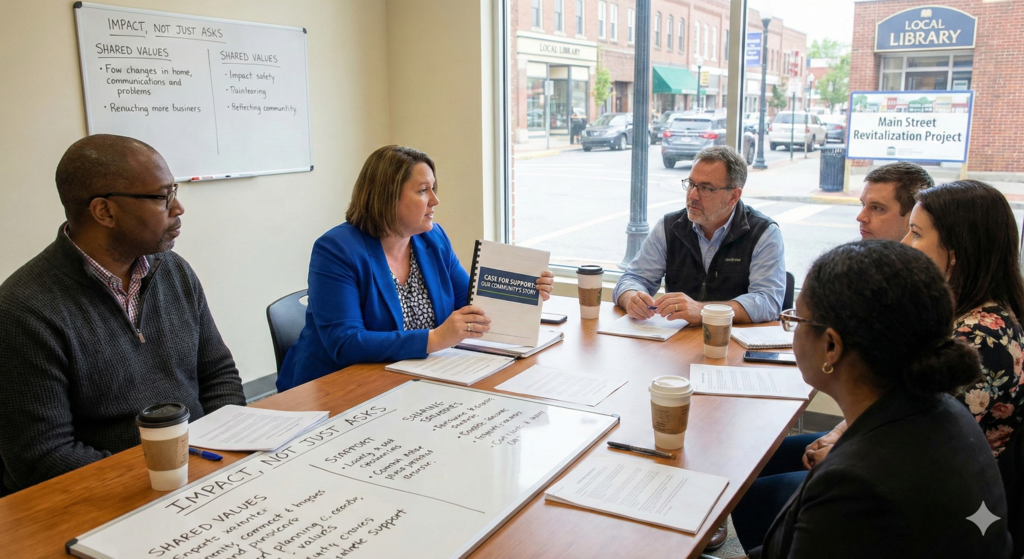
A Simple Communication Rhythm That Prevents Silos:
If you want one change that improves outcomes quickly, build a lightweight rhythm that forces alignment:
Weekly (15 minutes): development + marketing + program lead: “What are we saying this week?”
Monthly (30 minutes): pipeline review + story inventory: which proof points need refreshing, which outcomes need updated numbers.
Quarterly (60 minutes): board fundraising committee: role clarity, top prospects, and risk spread.
This is the kind of structure a fundraising consulting company will often reinforce, not because it is fancy, but because it prevents avoidable mistakes: outdated program claims, duplicate outreach, underprepared board asks, and internal surprises.
FAQs:
Q1) What is a nonprofit case for support and what should it include?
A: A nonprofit case for support is the core fundraising narrative that explains what your organization does, why it matters, why now is the right moment to act, and what changes if a campaign is funded. It is not just a document—it is a shared operating language that your staff, board, and volunteers all reference when talking to donors, writing grants, or preparing for a major ask. The strongest cases for support are built around three non-negotiables: one clear promise stated in plain language (what changes because you exist, and what changes next if this effort succeeds), one measurable definition of success tied to outcomes and a realistic timeline rather than activities, and one shared set of decisions that makes explicit what is being expanded, what is being retired, and what stays the same. Beyond the narrative itself, a well-built case should be reusable across formats—a board member’s coffee meeting, a grant application, a campaign microsite, a stewardship update—staying consistent while flexing for context. At The Hodge Group, we treat the case for support as the first thing to get right before any campaign material, brochure, or outreach plan is built, because everything else is only as strong as the story underneath it.
Q2) How do you keep fundraising messaging consistent across staff, board, and grant writing during a capital campaign?
A: Inconsistent messaging is one of the most common and costly problems in a capital campaign—and it almost always traces back to departments operating in silos rather than from a shared source of truth. The most practical remedy is a single “message spine” that captures your promise, your proof, and your plan and becomes the standard reference for anyone writing, presenting, or meeting with donors. Every communication—from a grant narrative to a board member’s talking points to a cultivation dinner conversation—should pass a simple checkpoint: does this match the current program plan, the current numbers, and the approved narrative? Beyond the document itself, a lightweight alignment rhythm prevents drift: a 15-minute weekly sync between development, marketing, and program leadership to align on what is being said that week; a monthly pipeline and story inventory review to refresh proof points and outcomes; and a quarterly board fundraising committee meeting to confirm role clarity, top prospects, and risk spread. A CRM system supports all of this by ensuring that board members, grant writers, and development staff are referencing the same donor history, the same naming conventions, and the same campaign status—so no donor ever receives a mixed message or an “accidental” conversation that undercuts the ask.
Q3) What should we include to make it feel credible, not emotional fluff?
A: Pair human stories with specifics. Use outcome metrics, timeframes, who benefits, what it costs, and what success looks like in the next 12–36 months. Donors respond to warmth, but they commit to clarity. If you’re searching for “Capital campaign consultant near me,” look for someone who will push you toward measurable outcomes and honest trade-offs, not just prettier storytelling.
Q4) How do we avoid hurting annual giving during a capital effort?
A: Be explicit about how annual giving fits into the plan, keep stewardship updates frequent, and segment messaging so annual donors don’t feel ignored until they “upgrade.” A capital effort should deepen relationships, not replace them. Strong fundraising consulting services will help you set guardrails: clear segmentation, consistent touchpoints, and a realistic calendar so the annual engine stays healthy while the campaign runs.
Final Thoughts:
A case for support is more than a pitch. It is your organization’s shared story, kept honest by internal alignment. When your teams communicate clearly, your board feels confident, your donors hear the same truth from every touchpoint, and your fundraising becomes steadier, not just bigger.