
A Six Sigma Lesson for Nonprofits:
In the manufacturing and business sectors, many pursue Six Sigma credentials, which essentially teach that it costs more to correct mistakes than to do things right the first time. From this framework, it moves through a certification series to ensure the best practices can be applied toward the greatest return on investment of both time and money.
Nonprofits can benefit from this theory as well within the context of avoiding the creation of a loosely developed fundraising plan. While pulling together a plan that is not tightly aligned with your strategic goals and financial needs may not appear catastrophic at first, the hidden costs compound over time. Instead of creating sustainable growth, organizations end up spending valuable time and resources untangling avoidable problems. A clear nonprofit development plan prevents that.
These “rework” costs manifest in many ways:
Staff Burnout – Teams forced into ongoing cycles of “emergency campaigns” which lead to analysis paralysis.
Donor Fatigue – Supporters exhausted by repeated asks without meaningful engagement.
Revenue Instability – Overreliance on the same grants or single sources of income leaves organizations vulnerable.
Reputational Risk – Constant financial crises erode donor trust and organizational credibility.
Just like in operations management, the lesson is clear: an upfront investment in time and money (yes, it costs money to make money) will cost far less in the future than burning cycles through a loosely developed model.
Best Practices Backed by Metrics:
The good news is that a strong, sustainable development plan doesn’t have to be complicated. It does, however, require discipline, focus, and measurement. Here are the industry standards that should guide your framework:
Donor Retention Rate – A healthy benchmark is 60% or higher. Falling below 50% signals a leaky pipeline that needs repair.
Fundraising ROI – For every dollar invested, events should net at least 3:1, while major giving campaigns can reach 5:1 or more.
Cost to Raise a Dollar (CTRD) – Sector averages: $0.20–$0.25 for major gifts, $0.50 for events. Anything higher is a red flag for inefficiency.
Gift Pipeline Health – A balanced portfolio across annual, mid-level, major, and planned gifts ensures resilience.
By tracking these metrics consistently, nonprofits can diagnose weaknesses before they spiral and double down on what works. A fundraising strategy consultant can help you set targets and build a realistic plan.
At THG, where we work with nonprofit organizations of all sizes and across all sectors, we hold firm to the evidence that what works best is a focus on developing meaningful relationships.
The Framework for Sustainability:
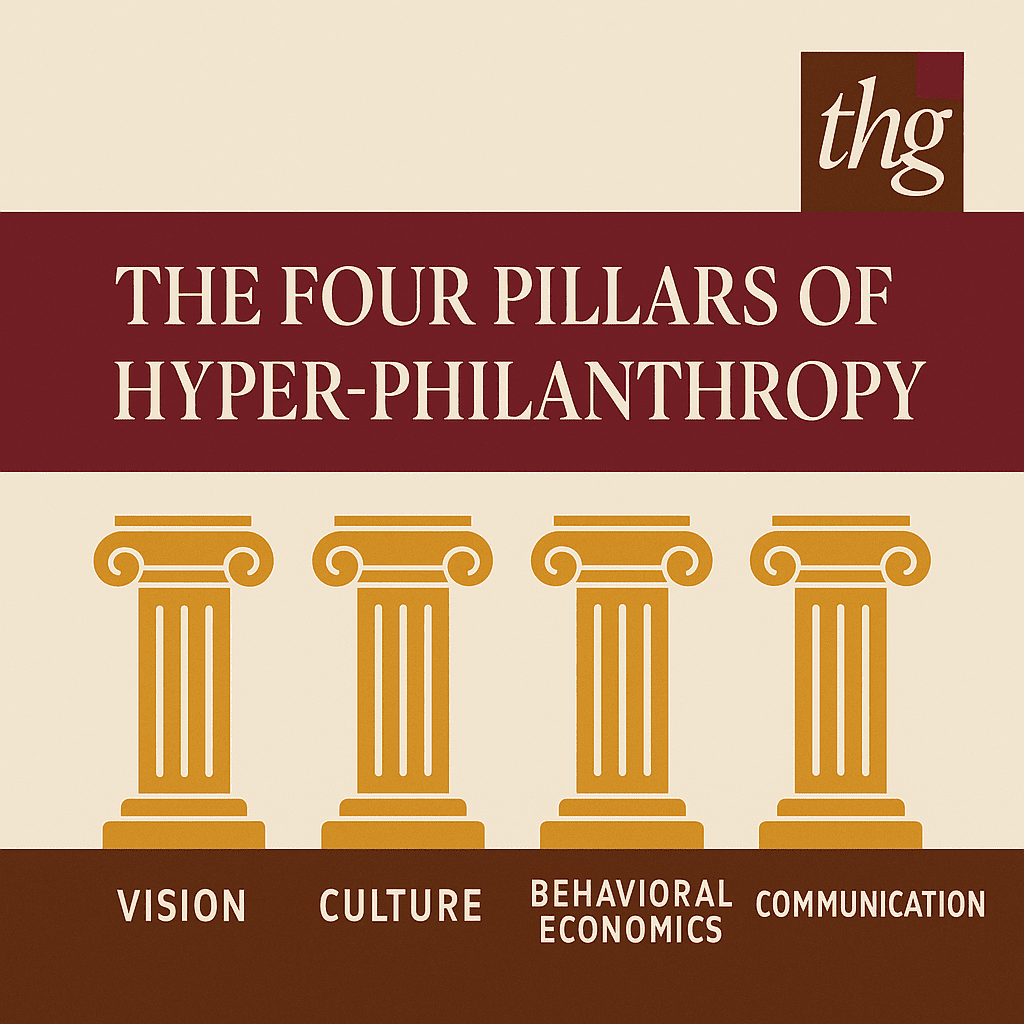
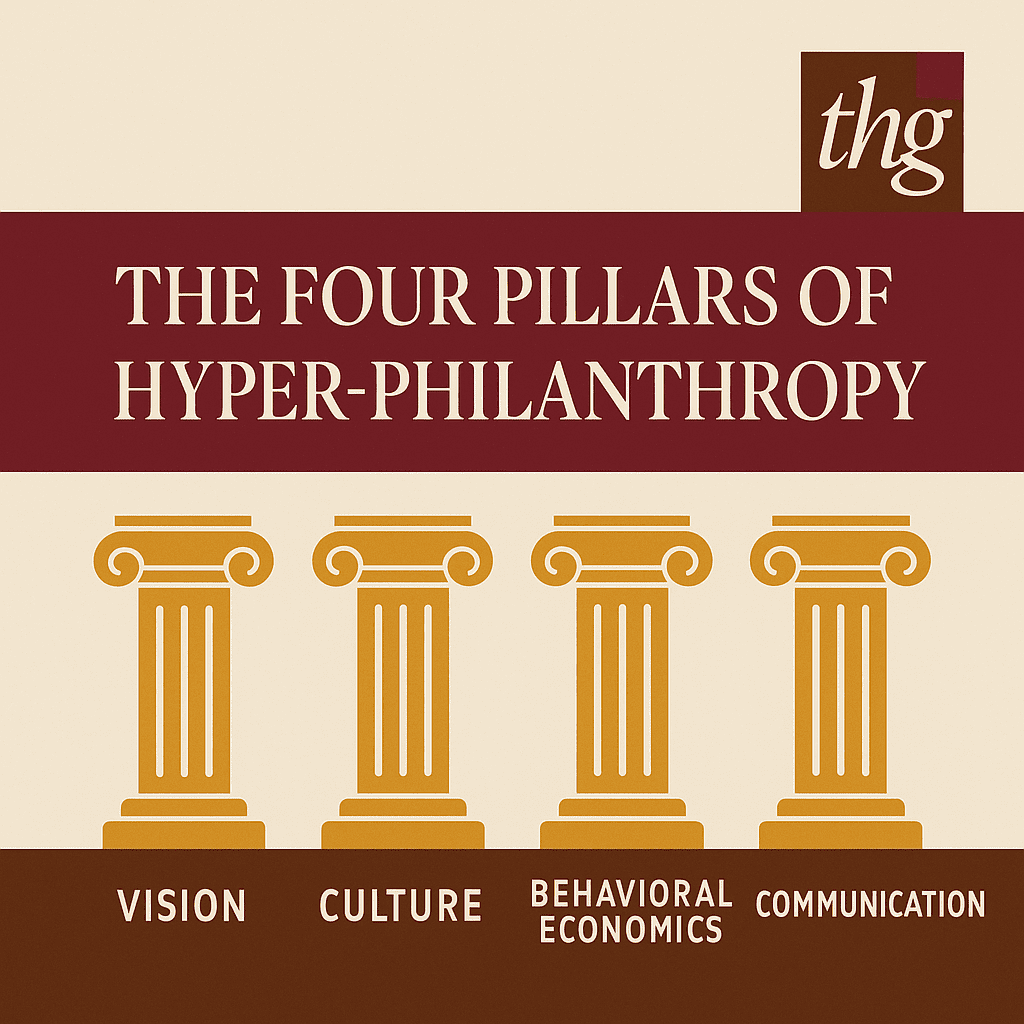
A truly effective nonprofit fundraising plan is not just a set of tactics. It’s a system built for resilience, adaptability, and growth. The Hodge Group aligns those whom we serve with a thriving plan that aligns with our four pillars of Hyper-Philanthropy™:
Vision – Clear, compelling strategy that connects mission to community impact.
Culture – Staff, board, and volunteers living into the plan so stakeholders see it in action.
Behavioral Economics – Understanding how donors think and making giving easy, joyful, and meaningful.
Communication – Sharing the story consistently so donors invest not just in programs but also in the organization’s future.
This is the nonprofit equivalent of Six Sigma discipline: designing a process that avoids rework, increases efficiency, and builds long-term trust.
FAQ:
Q1: What should a nonprofit development plan include to ensure sustainable fundraising growth?
A: A strong nonprofit development plan is not just a list of fundraising tactics—it is a system built for resilience, adaptability, and measurable growth. At The Hodge Group, we align our clients with a framework built around four foundational pillars. Vision provides the strategic direction: a clear, compelling case that connects your mission to community outcomes and gives donors a reason to invest in the future, not just the present. Culture ensures that staff, board, and volunteers are living the plan—fundraising succeeds when the entire organization is aligned around philanthropy as a shared value, not just the development department’s responsibility. Behavioral economics means understanding how donors actually make decisions and designing your giving experience to be easy, joyful, and meaningful—reducing friction rather than increasing pressure. Communication ensures your story is told consistently across every donor touchpoint, so supporters feel connected to the mission year-round, not just during a campaign. Beyond these pillars, a functional development plan tracks four performance benchmarks regularly: donor retention rate (a healthy baseline is 60% or higher), fundraising ROI (events should net at least 3:1, major giving campaigns can reach 5:1 or more), cost to raise a dollar (sector averages are $0.20–$0.25 for major gifts and $0.50 for events), and gift pipeline health across annual, mid-level, major, and planned giving. These metrics turn aspiration into accountability.
Q2: What are the key fundraising KPIs and benchmarks every nonprofit should track?
A: Tracking the right metrics is what separates a fundraising plan from a fundraising system—and it is where most organizations leave significant value on the table. Four core KPIs deserve consistent attention. Donor retention rate is the most foundational: a healthy benchmark is 60% or higher, and falling below 50% signals a leaky pipeline that requires structural repair before investing further in acquisition. Fundraising ROI measures the efficiency of your revenue-generating activities—events should net at least 3:1, while well-managed major giving campaigns can reach 5:1 or more, making them among the most cost-effective fundraising investments available. Cost to raise a dollar (CTRD or CPDR) benchmarks your spending against revenue: sector averages are $0.20–$0.25 for major gifts, around $0.50 for events, and anything materially higher is a signal of structural inefficiency worth diagnosing. Gift pipeline health—tracking your balance across annual, mid-level, major, and planned giving—is the structural measure of long-term resilience. Overreliance on any single revenue stream creates vulnerability that compounds over time. Tracking these four benchmarks consistently does not just tell you how you are performing—it tells you where to invest, where to repair, and where the next growth opportunity is hiding.
Q3: What are the real hidden costs of a weak nonprofit fundraising plan beyond just lost donations?
A: The most damaging costs of a loosely developed fundraising plan are not what shows up on a balance sheet—they are what compounds quietly in your organization’s capacity, culture, and credibility over time. Applying the logic of Six Sigma, a framework widely used in operations management that teaches it costs far more to correct mistakes than to prevent them, the same principle holds for nonprofit fundraising: the upfront investment in a disciplined plan is always less expensive than the rework cycle that follows a poor one. The four most common hidden costs are staff burnout—teams forced into repeated emergency campaigns experience analysis paralysis, high turnover, and declining proposal quality; donor fatigue—supporters exhausted by repeated asks without meaningful engagement quietly disengage, and their lifetime value is lost rather than captured; revenue instability—overreliance on a single grant, a major donor, or one annual event leaves organizations structurally vulnerable to any single disruption; and reputational risk—constant financial crises erode donor trust and organizational credibility in ways that can take years to rebuild. None of these appear as line items in a budget review. All of them can be prevented by investing the time and resources to build a fundraising plan that is tightly aligned with strategic goals, properly measured, and regularly reviewed.
Conclusion:
The true cost of a loosely developed nonprofit fundraising plan isn’t just lost donations—it’s lost momentum, missed opportunities, and weakened trust. By adopting proven best practices and measuring against key performance indicators, nonprofits can move beyond crisis management and into sustainable growth. Doing it right the first time doesn’t just save money—it accelerates impact and advances your mission.