
According to the National Philanthropic Trust’s 2024 DAF Report, DAFs (donor advised funds) held an estimated $251.52 billion in assets across nearly 1.8 million accounts in 2023, with grants to nonprofits reaching $54.77 billion. In fiscal year 2024, grants from DAFs to qualified charities reached $64.89 billion. The money is there. The question is whether your organization has built the infrastructure to receive it.
For nonprofit organizations, the opportunity is not simply to understand donor-advised fund rules, but to build the mechanisms needed to incorporate DAF giving seamlessly into the development function.
A strong DAF infrastructure is a set of connected practices that help your organization receive, record, acknowledge, steward, and invite donor-advised fund grants accurately. When those practices are clear, DAF giving becomes easier for the donor and more useful to your organization’s broader relationship-building work.
How DAF Giving Works:
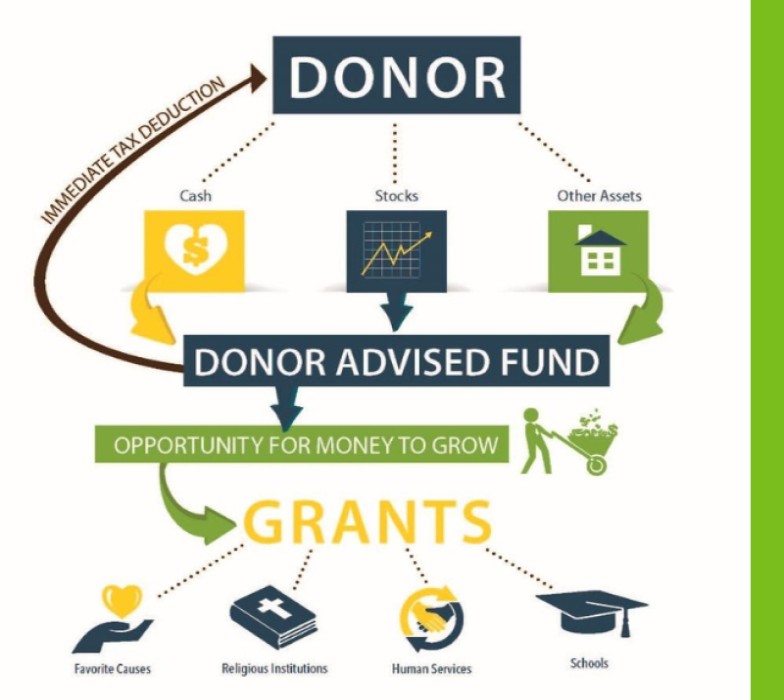
A DAF is administered by a sponsoring organization, typically a public charity such as Fidelity Charitable, DAFgiving360 (formerly Schwab Charitable), a community foundation, or another charitable sponsor. Once a donor contributes assets to the DAF, the sponsoring organization has legal control of those assets. The donor retains advisory privileges and may recommend grants to eligible charities, subject to the sponsor’s review and approval.
Are There Compliance Rules?
In November 2023, the IRS and U.S. Treasury issued proposed regulations (REG-142338-07) addressing donor advised funds rules for the first time since the Pension Protection Act of 2006. As of 2026, no final regulations have been published, and the 2006 rules remain in effect.
The proposals would restrict investment advisor compensation drawn from DAF assets, broaden the definition of what constitutes a DAF, and add anti-abuse provisions preventing donors from directing how grant proceeds are used after distribution. The formal IRS public hearing in May 2024 attracted more than 30 speakers and written comment from over 150 organizations, underscoring the significant interest in how any final regulations may be structured.
No new compliance action is currently required in response to the proposed regulations. This is still an appropriate time to review your gift acceptance policy, ensure it explicitly addresses DAF grants, and build internal fluency with how these accounts work.
Building Your Infrastructure:
Put Policy and Training Behind the Practice
DAF readiness does not reside in a single department or process. Incorporate DAF grants into your gift acceptance policy, database procedures, acknowledgment templates, finance reconciliation, staff training, and annual stewardship calendar.
Start with Accurate Gift Acknowledgment and Workflow
DAF grants are legally issued by the sponsoring organization, while the individual or family recommending the grant may represent the relationship your organization wants to deepen. Your records should preserve both distinctions. If the process stops with recording and acknowledging the sponsoring organization, valuable relationship information may become buried in the paperwork. Record the sponsoring organization as the legal grant maker and follow any acknowledgment instructions it provides. Do not issue a charitable tax receipt to the person or household recommending the grant because any applicable deduction occurred when the donor contributed assets to the sponsoring organization. When the recommending donor is identified, thank that person or household for initiating the grant, identify the grant’s purpose, and explain the impact it will support.
To enhance the acknowledgment process, make sure your department understands how to access full acknowledgment information and how to preserve whatever information is provided. The grant communication may include the donor’s name and contact information, the name of the charitable account, or no identifying information at all. Practices vary by sponsor and by the donor’s privacy selection. Fidelity Charitable, for example, defaults to full acknowledgment information but allows donors to choose partial or full anonymity. If you come across the latter, it limits the opportunity to steward a relationship, but your processes must respect the donor’s choice.
Development, finance, and advancement services should know who reviews grant detail, who updates the CRM, who prepares the acknowledgment, and who initiates stewardship when a donor is known.
Build a DAF-Aware CRM Structure
For each DAF grant, capture the information available in the grant letter, electronic transfer detail, or sponsor portal, including:
- The sponsoring organization as the legal grant maker
- The DAF or charitable account name, when provided
- The recommending donor or donor advisor, when disclosed
- The grant purpose, designation, or restrictions
- The acknowledgment preference, including partial or full anonymity
- The relationship between the sponsor record, the fund record, and the individual or household record
Prepare a Case for Recommendation
Avoid assuming that assets already placed in a DAF make a donor easier to solicit or less in need of cultivation. The funds are charitable assets, but the donor still has choices about which organizations to recommend. Apply the same fundamentals: listen, align the opportunity with the donor’s interests, report on impact, and build trust over time.
Because DAF donors still need a compelling reason to support your organization, strengthen your donor acquisition strategies and donor engagement strategies with an organized case for recommendation. It should answer practical questions: What will this grant make possible? Is the opportunity currently fundable? How should the donor identify the purpose? Who can answer questions?
Make DAF Giving Easy to Complete
As part of your donor retention strategies, make sure DAF donors do not have to search for the information needed to recommend a grant. These donors already have charitable assets set aside, but your organization must still earn their recommendation. Once they decide to support you, make the process as easy as possible. One way is to create a clear DAF giving page that may include:
- Your organization’s legal name, public-facing name, address, and federal tax identification number
- A plain-language explanation of how to recommend a DAF grant
- The development office contact for questions or advance notice
- Instructions for notifying the organization of a grant, especially when the donor wants personal acknowledgment
- Priority funding opportunities and language donors can use to designate a grant
- An electronic DAF giving tool, when it fits the organization’s budget and fundraising platform
You should also keep your legal name, address, tax status, and contact information current with the IRS and commonly used DAF sponsors. Enrollment in electronic grant delivery, when available, can improve speed and provide more consistent grant-detail reporting.
Include DAFs in Stewardship and Gift Planning
Known DAF donors should be included in ordinary stewardship plans, with communication tailored to their interests and the grants they have recommended. Useful donor development strategies include timely impact updates, invitations to see the work, personal contact when appropriate, and an easy path to recommend future grants. When appropriate, stewardship can also open a broader legacy-giving conversation.
Sponsoring organizations commonly offer succession options, which may include naming individual successors, charitable beneficiaries, or both. The available choices and default treatment of a remaining balance vary by sponsor, so nonprofits should not make universal claims. Instead, invite interested donors to review their succession instructions with their DAF sponsor and professional advisors, and provide your organization’s correct legal information if they wish to name it as a charitable beneficiary.
Frequently Asked Questions:
Q1. What is the difference between a DAF grant and a personal charitable gift?
When a donor contributes to a DAF, the sponsoring organization assumes legal ownership and control of the assets. The donor retains the ability to recommend grants, subject to the sponsor’s approval. When the recommending donor is identified, the nonprofit should steward that individual or household while recording the sponsoring organization as the legal grant maker.
Q2. Have the proposed IRS DAF regulations been finalized?
No. As of 2026, the proposed regulations from November 2023 remain unfinalized. The 2006 Pension Protection Act rules remain in effect. No new compliance action is currently required in response to the proposed regulations.
Q3. Can a nonprofit proactively encourage donors to recommend a DAF grant?
Yes, and they should. Nonprofits can communicate DAF giving opportunities directly, provide recommendation instructions, and cultivate relationships with known DAF holders. The conversation belongs with the individual, not the sponsoring organization.
Q4. Should our gift acceptance policy address DAFs specifically?
Yes. A clear policy should explain how DAF grants are recorded, acknowledged, restricted, and reviewed when they involve pledges, event benefits, refunds, or other special conditions. Written procedures demonstrate that the organization is prepared to receive and steward these grants appropriately.
Final Thoughts:
Most DAF strategy conversations stop at “make it easy for donors to give.” That is the floor, not the ceiling. The organizations gaining real ground are building a genuine donor engagement strategy around their known DAF holders and making it easy for those donors to recommend grants through their sponsoring organizations.
The Hodge Group helps nonprofits build the development infrastructure to do exactly that, and you can explore what that looks like in practice through its fundraising consulting services.